Who Buys Clearance Food & Drink Stock in the UK
- Selling surplus
- Food & drink
- Operations
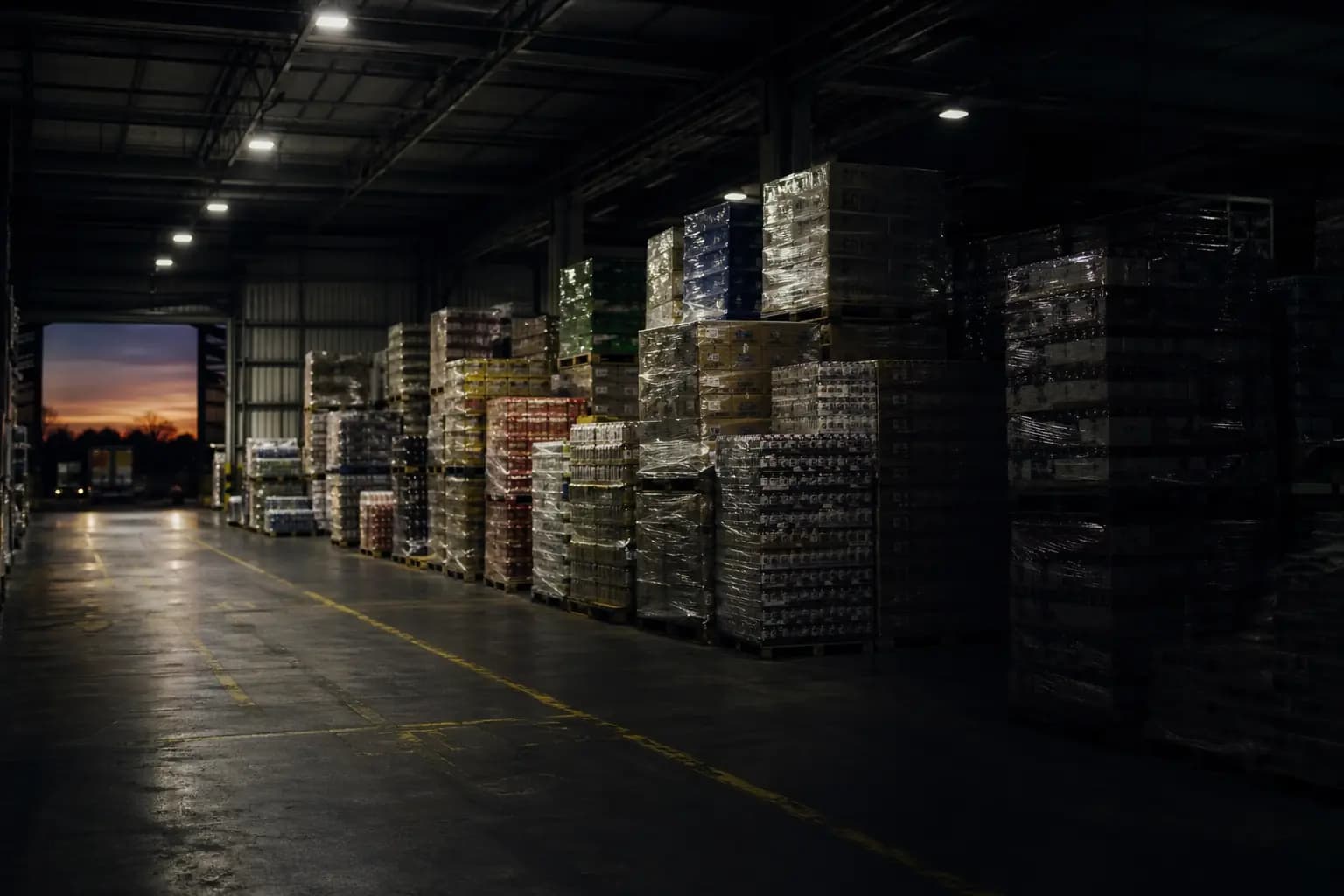
Stock becomes clearance the moment the range moves on without it. The line is discontinued, the promotion has ended, the season has passed or the artwork has changed, and what is left in the warehouse is good product with no slot on a full-price shelf. To the trade, clearance is a supply type with established buyers behind it. Here is who those buyers are, what each of them takes, where your stock ends up and what the sale looks like from your side.
Who buys clearance food and drink
Sellers often go looking for "clearance stock buyers" as if there were one kind. There are four, and they want different things, which is why a single clearance load often ends up split between them.
Discount retailers and bargain stores. High-street value chains and independent discounters build their offer on branded lines at sharp prices. Clearance is how those shelves get filled.
Wholesalers and cash-and-carry. These are volume buyers who trade stock onward. For them, clearance is a source of branded lines at a price that leaves room for the next sale.
Export traders. Exporters move UK stock into value markets overseas, where a line that has lost its place here is simply new product.
Online sellers and box schemes. Marketplace sellers and subscription box operators need a changing supply of branded lines at a low cost price, and clearance provides it.
Why the stock is surplus steers which of them takes it. An end-of-line range, post-promotion residue, seasonal overhang, a rebrand or pack change, a delisting and a whole-warehouse clearance each suit a different mix of the four. Our desk is one of the clearance food and drink buyers that sell into all four channels, so you deal with one counterparty and the splitting happens after the stock has left your yard.
What each kind of buyer takes
The four channels differ most in the shape of load that suits them.
| Buyer type | Loads that suit them | What that means for your load |
|---|---|---|
| Discount retailers and bargain stores | Branded, shelf-ready lines in retail packs, with enough depth to run across their stores | Name the brand and pack size on your list, because that is what this channel buys on |
| Wholesalers and cash-and-carry | Full pallets and lorry loads of ambient grocery, soft drinks and household lines | A big volume of a single line works in your favour here |
| Export traders | Volume lines for markets where best-before conventions leave more time on a code | Say which market a line was labelled for, because it decides how far it can go |
| Online sellers and box schemes | Smaller mixed consignments of branded lines | Part pallets and odd quantities still count, so put them on the list |
The shape of a load decides its buyer more than the brand does. Depth matters: a deep run of one product and a mixed load of many products are different propositions, and they go to different places. Pack format matters too. Price-marked packs, which carry a printed shelf price, suit some channels and rule out others, and so do multibuy formats. So does date runway, because a channel that sells stock through in days can work with a shorter best-before date than one that holds it for weeks.
None of this needs solving before you send a list. It is simply why one list comes back with a broader answer than you expected, and another with a narrower one. If price is the question, our guide covers which factors move the number on a clearance offer.
Where your stock does and does not end up
For most brands the real worry is not who buys the stock. It is where it reappears. Nobody wants a clearance line turning up beside the full-price range in a customer's store, or on a public listing their trade customers can browse.
That is what channel control is for. Stock is matched to buyers whose market does not overlap yours, and it is sold quietly to vetted discount, wholesale and export buyers, never advertised on a public listing. Where a brand needs more protection, and it is agreed, there are further options: a non-disclosure agreement, delabelling or export-only routing.
The important word is agreed. Tell us the constraints before the deal, not after. Where a resale channel or territory restriction is agreed, it is written into the deal terms and it binds the buyer, as our terms of business set out. If there is a channel or a region your stock must stay away from, say so when you send the list.
What the sale looks like from your side
A broker sale is short on admin by design.
What you send. One stock list covering the whole clearance, strong lines and awkward ones together. A spreadsheet, a photo of a pallet label or a plain email all work.
What comes back. One written offer for the whole lot, which we aim to return within 24 hours. It is a single figure, with no fees or commission taken off it afterwards. The offer also sets out the payment terms, which are agreed per deal, the collection plan and any resale restriction that has been agreed. It carries no obligation, so you can put it in front of whoever signs it off.
What happens next. If you accept, we arrange the haulage. The stock leaves in one collection, or in phases for a bigger estate. The offer is priced from your list, so the load needs to match it. If what is on the dock differs from what was listed, we may adjust the price, take part of the load or decline it.
The seller process step by step covers each stage in more detail. And if you are still weighing a broker against the alternatives, we have every UK route for surplus food stock compared.
What to put on a clearance stock list
A good list gets you a faster answer. A few details do most of the work: the product, brand and pack size; the quantity by case, pallet or load; the date codes, with batch codes if you have them; and where the stock is sitting and how it is stored. Include the lines you expect nobody to want, because a whole-lot offer prices them alongside the good ones. An incomplete list is still worth sending, and we will ask for whatever is missing. There is more on what the desk buys and what to put on the list.
Clearance stock has buyers, and more kinds of them than most sellers expect. You do not need to find them, negotiate with each one or work out who takes what. Send one list and get a stock offer: one written number for the whole lot, from a desk that already sells into every channel above.
Frequently asked questions
Who buys clearance stock in the UK?
There are four kinds of trade buyer, from discount retailers to export traders, and you rarely have to find them one by one. A specialist broker buys the whole clearance and places each part in the channel that suits it.
Can I stop the stock being resold in a particular channel or country?
Yes, where it is agreed before the deal. A resale channel or territory restriction that has been agreed is stated in the deal terms and binds the buyer. Tell us which channels or countries matter when you send the list.
Do you already have a buyer lined up when you make the offer?
Your offer does not depend on it. Offers are priced against what trade buyers are paying for comparable lines that week, and we buy the stock outright, so the resale risk sits with us.