CSR in UK Food & Drink: Turning Waste Into Value (and Profit)
- CSR
- Compliance
- Food waste
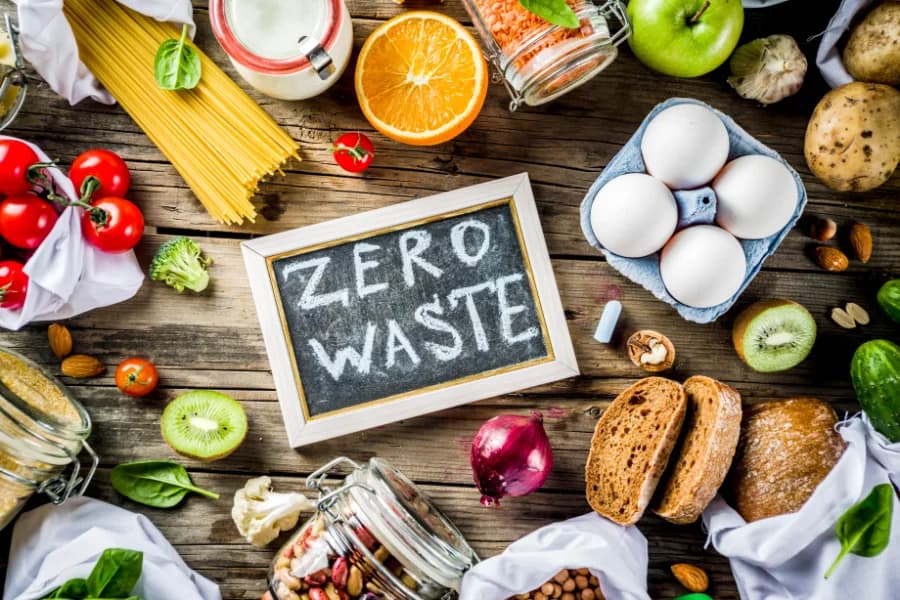
Corporate social responsibility (CSR) in the UK food and drink sector is no longer about nice-to-have pledges. It is increasingly about hard numbers, new legal duties, and practical ways to keep perfectly good stock out of the bin. Below is a clear, action-oriented playbook you can use right now to cut waste, recover value, and hit your sustainability goals.
The scale of the challenge (and opportunity)
The UK generates around 10.2 million tonnes of food waste each year across farms, manufacturing, retail, hospitality and homes. Households account for 58% of the total; on-farm 16%; manufacturing 13%; hospitality and food service 11%; retail 2%.
In homes alone, 6.0 million tonnes were wasted in 2022, about 88 kg per person, which shows why upstream prevention and smarter redistribution matter so much.
What UK policy expects from businesses (England)
The Food & Drink Waste Hierarchy is statutory guidance. You must prioritise prevention, then redistribution to people, followed by routes like animal feed, before any recovery or disposal options.
Separate collections are now law. Under Simpler Recycling, by 31 March 2025 most businesses in England had to arrange separate collections for food waste and core dry recyclables (glass, metal, plastic, paper and card). Micro-firms (fewer than 10 full-time staff) have a grace period to 31 March 2027.
Voluntary frameworks shaping best practice
The Courtauld Commitment has been renamed the UK Food & Drink Pact, with the same 2030 goals: halving per-capita post-farm-gate food waste, aligned to UN SDG 12.3. The Pact's Roadmap gives businesses a simple Target-Measure-Act model.
The practical CSR playbook
1) Prevent surplus at source
Build a rolling demand and shelf-life view, set targets, measure waste by SKU and site, then act with root-cause fixes: specifications, forecasting, pack sizes, markdown rules. The Pact's Food Waste Reduction Roadmap is a free blueprint.
2) Redistribute edible surplus to people first
Follow the updated surplus food redistribution guidance on date labels, handling and relabelling for safety, refreshed in November 2024 by WRAP, the FSA and Defra.
3) Choose the right commercial outlet when donation is not possible
a) Sell surplus food and drink (our speciality). When you have short-dated, overstocked or best-before-expired inventory, Refresh Surplus can purchase it rapidly and redistribute through compliant routes in the UK, Ireland and Europe: cutting waste, recovering cash, and improving your ESG story. Because the sale keeps goods in the human supply chain, it sits in the redistribution tier of the hierarchy, above feed, recovery and disposal, and the recovered tonnage is directly reportable against your waste targets.
b) Animal feed (where legally permitted). Former foodstuffs (certain bakery and dry goods, for example), segregated and uncontaminated, can be diverted to animal feed under strict rules. See WRAP's practical guide and the animal by-product guidance. Always check ABP and feed legislation and keep audit trails.
c) Energy recovery via anaerobic digestion (AD). For unavoidable, non-edible organics, AD turns food waste into biogas and digestate, a recognised recovery route under UK guidance with quality specifications (PAS 110) for digestate.
4) Report transparently and improve continuously
Even where mandatory food-waste reporting has not yet been introduced for large businesses, measuring and publishing progress remains best practice, and it is essential for the UK Food & Drink Pact.
How Refresh Surplus fits into your CSR goals
If you are searching for "surplus food UK", "FMCG stock clearance", "sell surplus food and drink", or "buy surplus FMCG products", you are in the right place. We help brands, manufacturers and retailers:
- Reduce food waste and scope 3 emissions by routing stock to higher-value outcomes: redistribution first, compliant alternatives where needed, in line with the waste hierarchy.
- Recover value quickly by selling excess inventory through a broker that understands date codes, labelling, batch control and route-to-market compliance.
- Stay compliant with separate collections and the shift away from disposal, dovetailing with your waste contracts and internal controls.
For the same cascade told from the stock's side rather than the policy's, see what happens to surplus stock once it leaves your warehouse.
Ready to act? Talk to the desk.
Quick reference
- UK food waste is ~10.2 million tonnes a year across sectors; households remain the largest share (WRAP key facts).
- Household food waste was 6.0 million tonnes in 2022 (WRAP household study).
- Waste hierarchy: prevent, then redistribute, then animal feed, then AD and energy recovery, with disposal last (GOV.UK).
- Separation duty (England): businesses by 31 March 2025, micro-firms by 31 March 2027 (GOV.UK).
- UK Food & Drink Pact (formerly Courtauld): halve per-capita post-farm-gate food waste by 2030, aligned to SDG 12.3 (WRAP).
Frequently asked questions
What is the food and drink waste hierarchy?
Statutory guidance for England that ranks the routes for surplus: prevention first, then redistribution to people, then animal feed, then recovery such as anaerobic digestion, with disposal last.
Do businesses have to separate food waste?
Yes. Under Simpler Recycling, most businesses in England had to arrange separate food waste collections by 31 March 2025; micro-firms with fewer than 10 full-time staff have until 31 March 2027.
Does selling surplus stock count towards CSR goals?
Yes. Selling surplus keeps edible goods in the human supply chain, which sits above feed, recovery and disposal in the waste hierarchy, and the recovered tonnage is reportable in ESG metrics.