Buy clearance food by the pallet.
Branded ambient grocery at 40 to 70% below wholesale: tins, jars, dry goods and world foods, surplus for reasons that have nothing to do with quality. Register your remit and matched pallet offers land in your inbox before they hit the open market.
- Branded grocery, pallet-priced
- Full traceability & date codes
- UK-wide delivery
Why good food goes cheap.
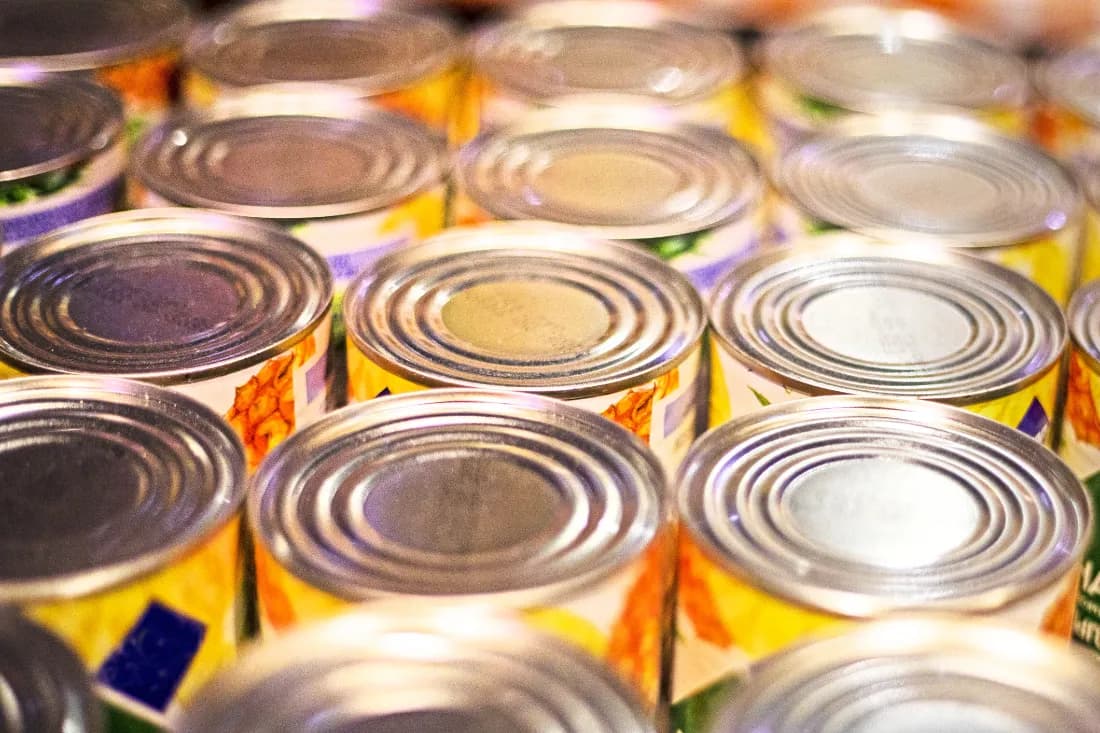
Clearance food isn't damaged food. It's the output of normal supply-chain friction: a forecast that overshot, a retailer range reset, a rebrand that orphaned perfectly good packaging, a date code drifting past mainstream retail's buying window while staying comfortably legal to sell.
Our desk buys those loads from manufacturers, wholesalers and retailers across the UK and Ireland, then routes them to registered buyers by category. Grocery is the deepest stream we trade: ambient lines surface every week, and the manifest always tells you exactly what the stock is, why it's surplus and what the dates say. Buy once to test the model; most grocery buyers are on their tenth load before the first season turns.
Buying clearance food well comes down to reading that manifest properly. Case count and pack format decide how the stock merchandises, the date position decides how long you have to shift it, and the reason a line went surplus tells you whether it will come round again. All three are in the offer before you commit, so the sums get done at your desk instead of at the dock.
What lands in grocery
A rolling mix rather than a fixed catalogue. Typical clearance food offers include:
Tinned & jarred
Soups, vegetables, fish, sauces and spreads. Long-life lines where even short-dated stock carries months of runway.
Dry goods
Pasta, rice, cereals, flour and baking. Staples that value retail can never stock too deeply.
Condiments & cooking
Sauces, oils, vinegars, herbs and spices. Frequent surplus from pack changes and promotional residue.
World foods
Import surpluses and delisted ranges with strong demand in independent and specialist retail.
Best-before-passed lines
Legal, clearly declared and priced accordingly. The original BBE is on the manifest, never discovered at goods-in.
Catering packs
Bulk formats from food-service oversupply, suited to caterers, processors and bulk-buy retail.
Who buys clearance grocery
If your customers want branded food at a sharper price, this stream fits:
Discount & value retail
High-street chains and independents whose shelves run on exactly this stock. Repeatable volume, weekly offers.
Convenience & independent grocers
Single-store and small-group buyers topping up ranges with branded lines at margin-friendly cost prices.
Exporters
Traders shipping ambient grocery to value markets across Europe and beyond, where date conventions allow longer runways.
Caterers & food service
Kitchens and processors buying catering packs and staples below the cash-and-carry price.
Wholesalers & cash-and-carry
Depots breaking pallets down for their own trade customers, adding branded grocery to mixed lists at prices that leave room for two margins.
Repackers & hamper builders
Operators assembling multi-buys, gift packs and hampers, where the pallet price on branded ambient lines decides whether the finished bundle works.
From register to delivered, in three steps
No portal, no bidding. The list does the work.
Tell us your grocery remit.
Categories, case volumes, price points and any date-code limits. The tighter the remit, the better the matches.
Matched pallets, direct to inbox.
Grocery loads are routed to buyers whose remit fits, before the open market sees them. Reply to reserve.
Tracked to your dock.
Manifest, date codes and traceability up front; haulage booked to your slot, typically dispatched within 48 hours.
Asked about
this category.
The practical questions buyers in this sector send before their first order, answered straight.
Are the dates always declared?
Always. Every line on the manifest carries its BBE or use-by position, and best-before-passed stock is labelled as such with the original date shown. No surprises at goods-in.
What's the minimum order on food?
Usually one pallet per line, with mixed-grocery pallets available for smaller shops. Full trailers get the keenest pricing.
How often does grocery stock come up?
Weekly at minimum; ambient grocery is the desk's deepest stream. Registered buyers see matched offers as loads land rather than on a fixed schedule.
Can I inspect before buying?
The manifest and photos do the heavy lifting, and condition is documented before dispatch. For larger recurring buyers, inspection visits can be arranged on standing arrangements.
Do you deliver outside the UK?
Yes: Ireland and 16 European markets, with export paperwork handled. UK mainland delivery typically dispatches within 48 hours of confirmation.
How do prices compare to cash-and-carry?
Pallet pricing typically runs 40 to 70% below standard wholesale, line-dependent. Clearance stock is priced on why it's surplus (dates, pack changes, volume), so the discount is real rather than a promotional sticker.
How much date life should I hold out for?
That depends on how fast your shelves turn, not on a rule of thumb. Ambient grocery with a couple of months on the code suits a store clearing a pallet a fortnight; a slower site wants a longer runway or smaller volumes. Set your minimum at registration and the matched offers respect it.
What's the difference between best-before and use-by on a grocery load?
Best-before marks quality, so ambient food stays legal to sell after it, and a whole value channel is built on exactly that stock. Use-by marks safety and is a hard stop: selling past it is illegal, and we never trade it. Every grocery manifest shows which marker a line carries, so you always know which side of that line you're buying on.
Get on the list before
the next load lands.
Buy clearance food and groceries by the pallet: branded ambient lines at 40-70% below wholesale, full traceability, UK-wide delivery. Register for offers.